How Many Types of Glaucoma Are There?
Open-Angle Glaucoma, Angle-Closure Glaucoma, (also called Closed-Angle Glaucoma), Congenital Glaucoma, and Secondary Glaucoma are the principal types of glaucoma.
Open-Angle Glaucoma
Open-Angle Glaucoma, which is the most common type of glaucoma, is a disorder where improper drain out of the eye fluid hampers the functioning of the optic nerve, leading to vision loss.
Open-Angle Glaucoma is an irony in itself. Since it is asymptomatic, you live with it without being aware that it exists…it is gradual and progressive, and the onset occurs without noticeable vision loss for many years.
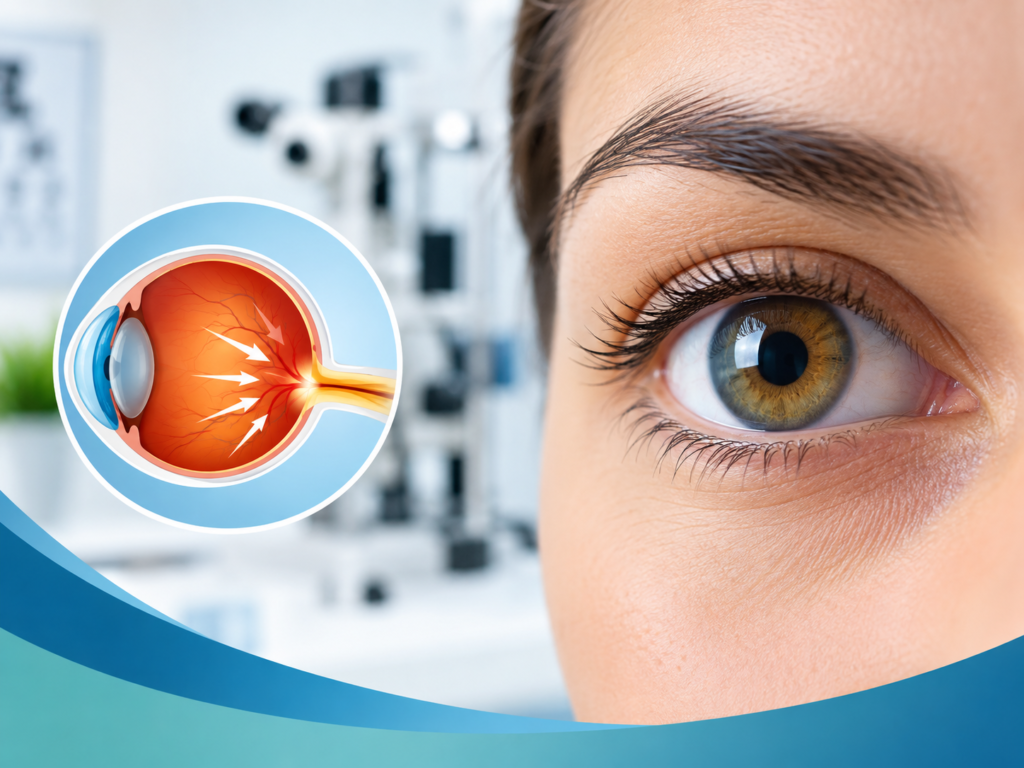
In a healthy eye, a natural balance exists between the fluid produced and the fluid that leaves the eye. Open-Angle Glaucoma occurs when the drainage channels do not drain out the fluid properly, leading to pressure build up on the optic nerve. This increased pressure, over a period of several years, can lead to vision loss and eventually, total blindness.
However, the good news is that if detected early, Open-Angle Glaucoma can be treated and further damage can be prevented. It can be cured using medicated eye drops, though minimally invasive surgery may be needed in some cases.
Angle-Closure Glaucoma
If you happen to experience severe eye pain, red eye, and nausea, you could be susceptible to Angle-Closure Glaucoma. In such a situation, you must consult an eye specialist – immediately!
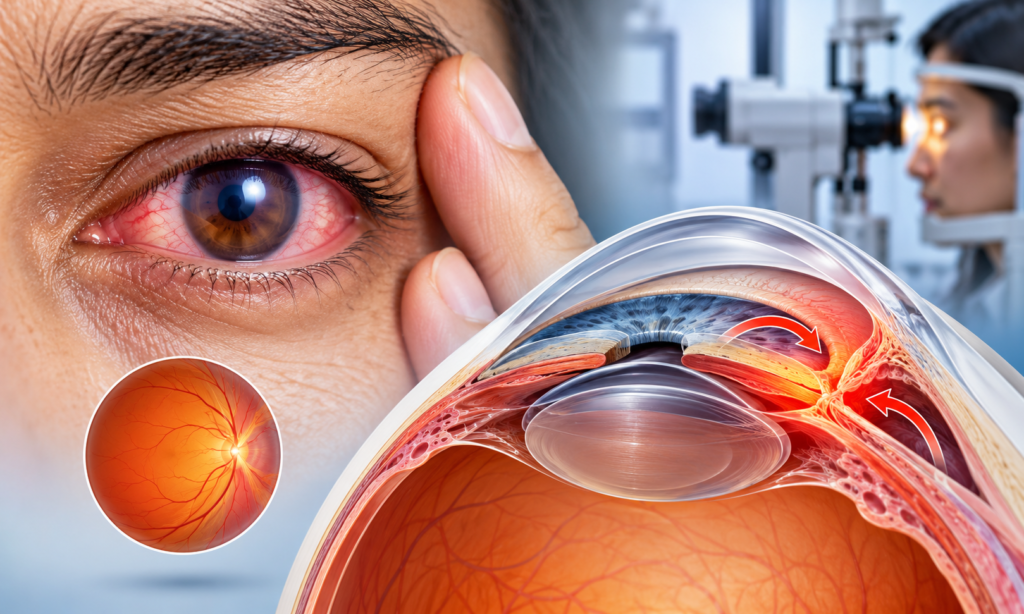
In Angle-Closure Glaucoma, the iris bulges or swells up, restricting the flow of the eye fluid. In case of Narrow Angle Glaucoma, there is a partial flow of eye fluid. However, in Acute Angle Glaucoma, the fluid is cut off totally.
The onset of Angle-Closure Glaucoma is sudden and rapid. Moreover, it should be treated as a medical emergency; if neglected, it can lead to permanent vision loss.
Angle-Closure Glaucoma can be treated with laser or conventional surgery, where doctors meticulously slice off a minute portion of the bulged up iris, thereby unblocking the clogged drainage channel.
Normal-Tension Glaucoma
As the name implies, Normal-Tension Glaucoma is where the Intraocular Pressure (IOP) is within the acceptable range (10-21mm Hg), yet the optic nerve is impaired and vision loss happens.
Poor blood flow, low blood pressure, vascular disease, and structurally sensitive optic nerves are the key factors that cause Normal-Tension Glaucoma.
It is treated by administering medicated eye drops that lower IOP by about 30% than the baseline value. If this approach fails, Selective Laser Trabeculoplasty (SLT) is used to treat it. In mild-to-moderate cases, Minimally Invasive Glaucoma Surgery (MIGS) is also adopted to achieve desired outcomes. This surgical approach is gentler and safer than a traditional Trabeculectomy.
Congenital or Childhood Glaucoma
Caused because of an undesirable genetic mutation, Congenital or Childhood Glaucoma is a hereditary disorder that is present at birth or develops during childhood.
It is a serious eye ailment that occurs because of abnormalities in the child’s eye, resulting in improper fluid drainage and build-up of IOP. If neglected, it can lead to vision loss and ultimately, total blindness.
Unlike adults, where medicated eye drops can often cure glaucoma, surgical procedures are the only option for treating Congenital or Childhood Glaucoma. In severe or complex cases, Drainage Implants are placed to stop the damage and further vision degradation.
Secondary Glaucoma
It is a type of glaucoma that develops as a result of other health and medical conditions, such as eye injuries, inflammation inside the eye, prolonged use of specific drugs like steroids, and severe diabetes and advanced cataracts.
Treatment for Secondary Glaucoma essentially depends on addressing the primary cause. In mild cases, medicated eye drops and pills will suffice. In progressive cases, laser surgery and, in severe conditions, invasive surgery is needed.
What are the Common Symptoms of Glaucoma?
You should seek out expert medical advice immediately if you notice any of these warning signs:
- Blurry Vision
- Diminished Side Vision (Tunnel Vision)
- Blind Spots
- Redness in the Eye
- Forehead or Eye Pain
- Recurring Headache
- Nausea or Vomiting
How is Glaucoma Diagnosed?
Doctors use the following diagnostic procedures to detect glaucoma:
Opthalmoscopy – It is also known as the Dilated Eye Exam. Here the doctor puts special eye drops into your eyes and uses special lights and lenses to check your retina, optic nerve, and blood vessels for susceptibility.
Tonometry – In this test, the doctor measures the pressure inside your eye (Intraocular Pressure or IOP) to determine the likelihood of you developing glaucoma.
Perimetry – Also called the Visual Field Test, it measures your entire range of vision and identifies areas where your vision is missing or reduced.
How are Different Types of Glaucoma Treated?
Open-Angle Glaucoma can be treated with medicated eye drops, laser surgery, and MIGS.
In case of Angle-Closure Glaucoma, patients get relief after administering advanced medications, either orally or through IV. In some instances, a surgical procedure called Laser Peripheral Iridotomy (LPI) is also used.
FAQs
What is the most common type of glaucoma?
Primary Open-Angle Glaucoma, which is reported in about 90% of patients, is the most common type.
Can glaucoma occur without high eye pressure?
Yes, it can.
Which type of glaucoma is considered an emergency?
Acute Angle-Closure Glaucoma is considered an emergency.
Can glaucoma cause permanent vision loss?
If not detected and left untreated, yes, it can.
Can glaucoma be cured completely?
No.

Dr Ashwini Karanjgaokar is a Consultant Ophthalmologist and Vitreo-Retinal Surgeon with over 30 years of experience. She specialises in retinal diseases, diabetic eye care, pediatric ophthalmology, and myopia management, and currently serves as a Visiting Vitreo-Retinal Consultant at Nanavati Max Super Speciality Hospital. Through her articles, she provides evidence-based guidance on eye health and vision care.