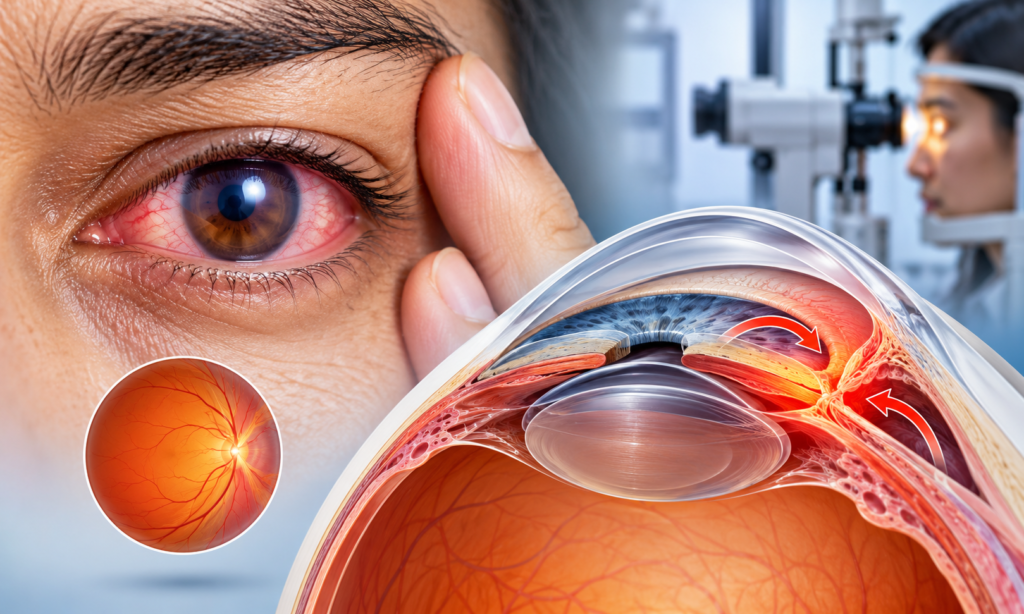

Is Glaucoma Hereditary?
Yes, glaucoma can be hereditary.
We carry numerous traits from our parents and ancestors through our genes. Some of them are desirable, some are unwanted. Glaucoma is one such adverse hereditary health issue.
Family members with a hereditary risk of glaucoma are more likely to develop the condition than those with no family history of glaucoma.
How Does Family History Increase Glaucoma Risk?
Glaucoma is closely linked to genetics. In fact, you are 4 to 10 times more likely to develop glaucoma if one of your parents or siblings is affected by it.
What Types of Glaucoma Can Be Linked to Genetics
Primary Open-Angle Glaucoma (POAG), Normal-Tension Glaucoma (NTG), Juvenile Open-Angle Glaucoma (JOAG), and Primary Congenital Glaucoma (PCG) are some of the major types of glaucoma that can be linked to genetics.
Genetic Risk Factors for Glaucoma
Inherited mutations, in genes such as MYOC, OPTN, and TBK1, are particularly responsible for causing primary Open-Angle Glaucoma and Normal-Tension Glaucoma.
These genetic changes can affect how fluid drains from the eye and may influence the functioning of the optic nerve, thereby increasing a person’s risk of developing glaucoma.
Why Early Detection Matters?
Glaucoma happens without any major forewarning. Perhaps the most alarming reason for considering early detection of glaucoma is that vision lost cannot be restored – it is permanent and irreversible.
How is Glaucoma Detected?
Though eye screening is the first diagnostic step to detecting glaucoma, it is often inadequate. Eye specialists use the below-mentioned advanced tests to detect glaucoma:
Opthalmoscopy – It is also known as the Dilated Eye Exam. Here the doctor puts special eye drops into your eyes and uses special lights and lenses to check your retina, optic nerve, and blood vessels for susceptibility.
Tonometry – In this test, the doctor measures the pressure inside your eye (Intraocular Pressure or IOP) to determine the likelihood of you developing glaucoma.
Perimetry – Also called the Visual Field Test, it measures your entire range of vision and identifies areas where your vision is missing or reduced.
Who Should Consider Regular Glaucoma Screening?
Eyes are one of the most sensitive and delicate human organs. As a responsible, health conscious citizen, it is our duty to take timely and proper care of our eyes.
As it happens, glaucoma is a silent killer of vision, which cannot be reversed. Since glaucoma symptoms are often not pronounced, they usually go unnoticed. Hence you should consult an eye specialist on priority if you experience one of these warning signs:
- Blurry Vision
- Diminished Side Vision (Tunnel Vision)
- Blind Spots
- Redness in the Eye
- Forehead or Eye Pain
- Recurring Headache
- Nausea or Vomiting
In addition to these signs and symptoms, glaucoma screening should be done regularly if you:
- Are 40 or above
- Have a genetic history of glaucoma – meaning a first-degree relative who is diagnosed with glaucoma
- Are under medication for heavy diabetes and/or hypertension
- Have been using drugs like corticosteroid for an unusually long time
Can Glaucoma Be Prevented If It Runs in the Family?
Well, we cannot change our genes, can we?
If a first-degree relative happens to have glaucoma, we stand a higher chance of being affected.
To be honest, glaucoma cannot be prevented in its entirety. However, we can mitigate vision damage. Early detection, appropriate medical treatment, and professional care can help prevent total loss of vision.
FAQs
Is glaucoma hereditary?
Yes, glaucoma can be hereditary.
If my parent has glaucoma, will I get it?
You have a high likelihood of developing it. To be precise, you have a 4 to 10 time high probability of developing glaucoma if a first-degree relative already has it.
Should I get tested for glaucoma if it runs in the family?
Yes, indeed. You should not wait until any symptoms show up or you experience any type of discomfort related to vision.
If glaucoma runs in your family, you should consult an eye specialist on priority. Moreover, it is the responsibility of parents/elders in the family to get their children checked for glaucoma in case of hereditary occurrence. A baseline comprehensive glaucoma evaluation at the right time will help prevent or minimize vision damage.
At what age should glaucoma screening begin?
Ideally, it should begin at the age of 40. However, in cases where it is hereditary, glaucoma screening should be done earlier.
Can glaucoma be detected before symptoms appear?
Yes, it can be detected. Doctors resort to advanced tests such as Optical Coherence Tomography (OCT) and Visual Field Testing for detection.
Can genetic testing determine whether I will develop glaucoma?
No, not with certainty. However, it measures your genetic risk of developing glaucoma.
Can glaucoma be prevented if it is hereditary?
It can’t be prevented in totality, but the damage can certainly be reduced and controlled.

Dr Ashwini Karanjgaokar is a Consultant Ophthalmologist and Vitreo-Retinal Surgeon with over 30 years of experience. She specialises in retinal diseases, diabetic eye care, pediatric ophthalmology, and myopia management, and currently serves as a Visiting Vitreo-Retinal Consultant at Nanavati Max Super Speciality Hospital. Through her articles, she provides evidence-based guidance on eye health and vision care.